
Lab Notes: Content Hub OS - 06.11.26
Why I Rebuilt Content Hub OS From Scratch (And What I Learned)

The Stack Changed. Everything Else Followed.
The Automator’s Log documents Content Hub OS as I use it: what’s inside, how it works, and what I’ve learned running it on my own brand before opening it to anyone else. If you’re new here, CHOS is an AI-powered content operating system built for operators who are done doing everything manually. These notes are the inside look.
For about 18 months, CHOS was being built and ran on Softr.io and Make.com.
Softr handled the interface. Make handled the automations. Together they were good enough to prove the concept, serve early users, and teach me what the system actually needed to do.
Then the maintenance started winning.
Not catastrophically. Slowly. A Make scenario breaks when a third-party API changes something.
A Softr limitation means a feature I want to build isn’t possible without a workaround. A workaround creates another dependency. Another dependency creates another thing that can break.
The stack was no longer a tool. It was a job.
So I rebuilt.
CHOS now runs on Lovable and Supabase, with direct API integrations where automation is needed. Only 3 Make scenarios now instead of 48. No external automation layer sitting between the app and the logic. When something needs to happen in the platform, the platform does it.
The difference isn’t just aesthetic. It’s structural.
In the old stack, the automation logic lived outside the app. A status change in Softr triggered a Make webhook that called an API that wrote back to the database.
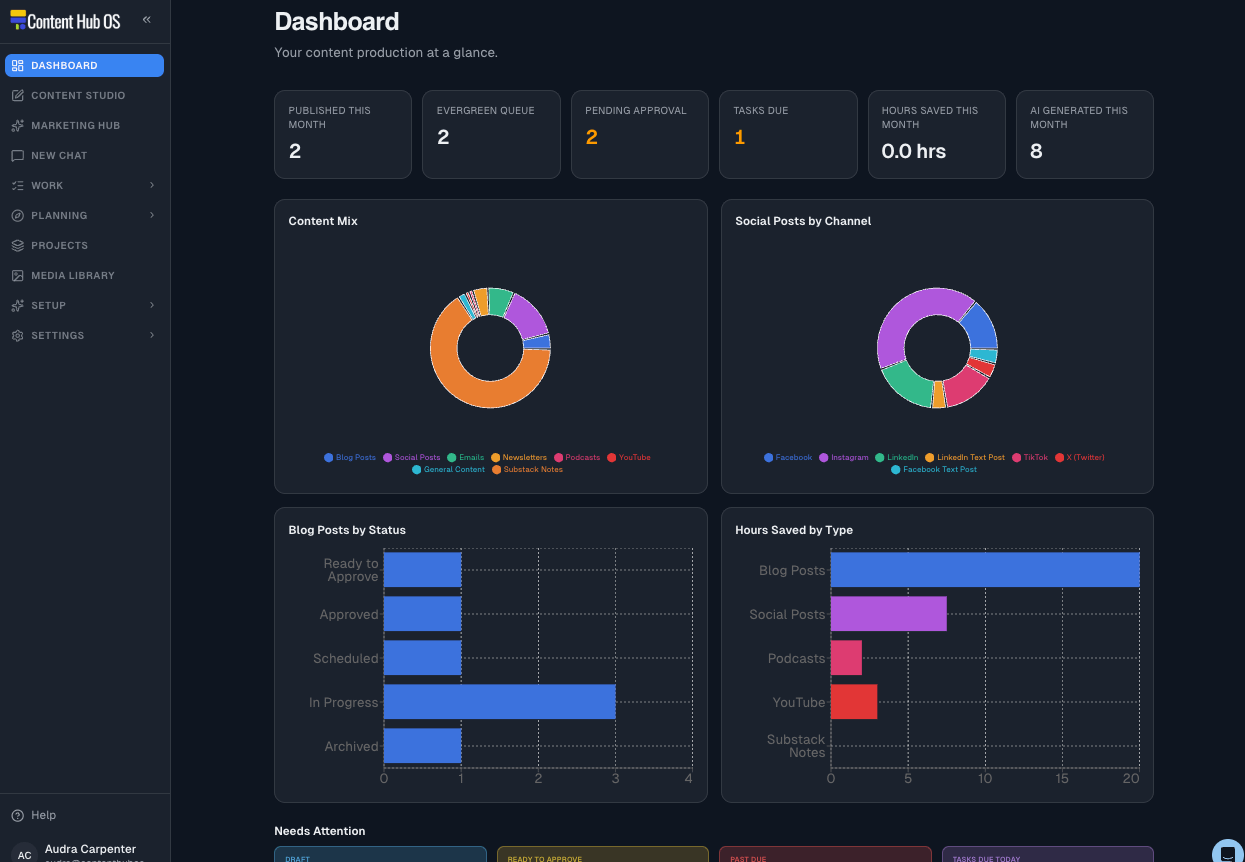
Three points of failure for one operation. In the new stack, that same operation is built into the application itself. The trigger and the action are the same system.
What that buys you: when something breaks, there’s one place to look. When something needs to change, there’s one place to change it.
When a user does something in the app, the app responds. Not a scenario watching for the event, deciding whether to fire, calling an external service, waiting for a response.
I didn’t rebuild because the old stack failed. I rebuilt because the new one made the thing I was actually building possible.
The version of CHOS that exists now (the calendar, the Marketing Hub, the brand-aware AI, the Admin Panel) could not have been built cleanly on the old architecture. Not because Softr is bad. Because the product outgrew the tool and AI has evolved enough for it to do what I wanted it to do.
That’s the signal worth watching for in your own stack.
Not “is this broken?”
“Is this still the right tool for what I’m actually building?”
~ Audra ✌️
Nice work on the App Audra!