
What Agents Can’t Buy
Agentic commerce doesn't create a data problem. It exposes a clarity problem that was always there.

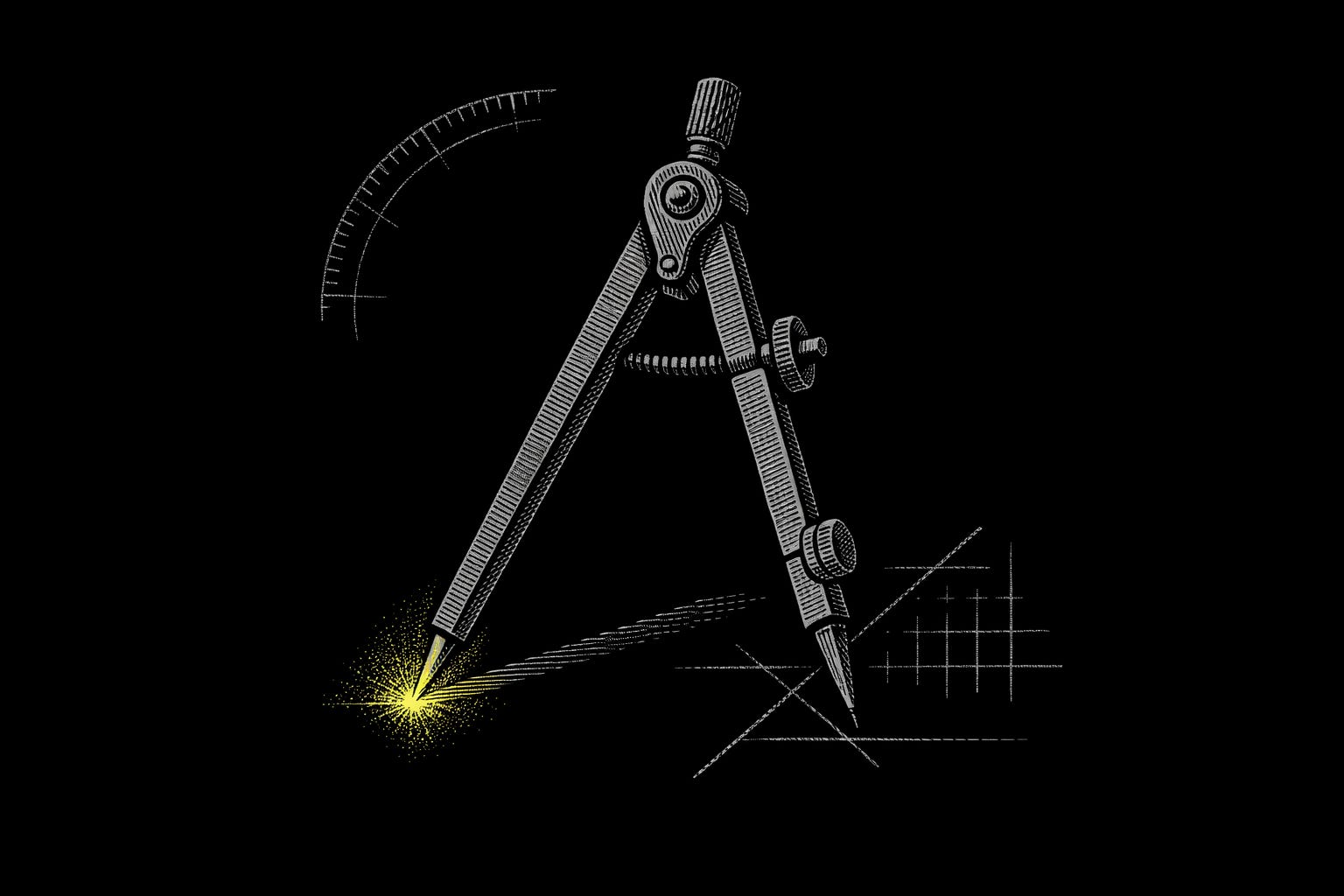
Agentic commerce doesn’t just change how purchasing happens. It asks a question most businesses have never had to answer cleanly.
What exactly do you sell, to whom, and why is it measurably better.
Not the version in your pitch deck. Not the story your best salesperson tells on a good day. The machine-readable answer. The one that exists in structured data, in consistent specifications, in attributes an algorithm can evaluate without a human in the room to fill the gaps.
Most businesses don’t have that answer. They have something adjacent to it, a value proposition that works because humans complete it. A salesperson who reads the room and adjusts. A website that creates feeling before it creates logic. A referral that arrives pre-sold and never needs to survive a rigorous evaluation. The gap between what the business actually is and what it claims to be gets bridged, constantly, invisibly, by human judgment on both sides of the transaction.
Agents don’t bridge gaps. They route around them.
This is the specification problem. And it’s more fundamental than an infrastructure question or a readiness question. It’s a business clarity question that agentic commerce is about to force into the open whether businesses are ready for it or not.
Consider what an agent actually does when it makes a purchasing decision. It evaluates against the parameters it was given. Price. Availability. Delivery time. Specification match. Review signals. Return policy. It looks for what it can measure and compares across what it can find. Everything that isn’t structured, everything that lives in narrative or nuance or the texture of a human interaction, is invisible to it. Not wrong. Not rejected. Simply not present in the evaluation.
For a significant portion of what businesses sell, that’s fine. The specifications are the product. A commodity is a commodity. An API either has the uptime it claims or it doesn’t. A manufacturer either hits the tolerance or they don’t. For these businesses the specification problem is actually an opportunity. Get your data clean, get your infrastructure legible, and agents route to you on merit.
But there’s a category of business where the value proposition has never been fully specified because it never had to be.
Professional services. Complex B2B. Any business where the relationship was doing structural work that nobody ever had to name because it was just how the work got done. These businesses don’t have a data problem. They have a definition problem. And they’re about to discover it the hard way.
What agentic commerce exposes isn’t weakness. It’s ambiguity that was always there.
The interesting question isn’t how to make an unspecifiable business legible to agents. Some things genuinely resist specification and that’s not a flaw. A lawyer’s judgment. A designer’s eye. The particular way a long-term partner understands your business without being briefed. These things have real value precisely because they can’t be reduced to attributes in a database.
The interesting question is whether your business knows which parts of its value actually fall into that category and which parts only felt unspecifiable because nobody had tried.
I’ve watched businesses discover mid-crisis that what they thought was relationship capital was actually just friction nobody had bothered to remove yet. When a competitor removed the friction more efficiently, the relationship turned out to be thinner than anyone had realized. That’s a brutal thing to learn. It’s also clarifying.
Agentic commerce is going to be that clarifying for a lot of businesses simultaneously. Not because agents are hostile to nuance. Because they’re indifferent to it. They don’t penalize what they can’t measure. They simply don’t see it.
Which means the businesses that will navigate this best aren’t necessarily the ones with the cleanest data or the most sophisticated APIs. They’re the ones that have done the harder work of understanding what they actually are. What part of their value is genuinely irreducible and worth protecting explicitly. What part was always specifiable and just hadn’t been specified yet.
That’s not an AI problem. That’s a business clarity problem. Agentic commerce is simply the forcing function that’s making it urgent.
The series started with a question: the buyer is leaving the room, do you know what you built assuming they’d always be there.
This is the answer most businesses aren’t ready to give.
Not because they don’t know their business. Because they’ve never had to know it at this level of precision. Humans forgive ambiguity. They complete incomplete pictures. They give benefit of the doubt. They buy on feeling and justify with logic after.
Agents don’t forgive ambiguity. They just move on.
And the businesses that get clear now, before the agents arrive in their category at scale, won’t just be more legible to machines. They’ll be clearer to themselves. Which turns out to be the more durable advantage.
✌️ Audra
P.S. The specification problem runs deeper than commerce. Every domain where agents are starting to operate, hiring, research, procurement, content, strategy, surfaces the same question. What can you define precisely enough to delegate, and what requires a human to hold. The businesses and operators who work that out now, while the stakes are still low enough to experiment, will be running a different kind of organization in three years than the ones who waited for the pressure to force the question.